

 0
 0
REVIEW: THE BEAST— Renny Harlin’s Tactical Thunderclap Is the Action Surge You’ve Been Waiting For
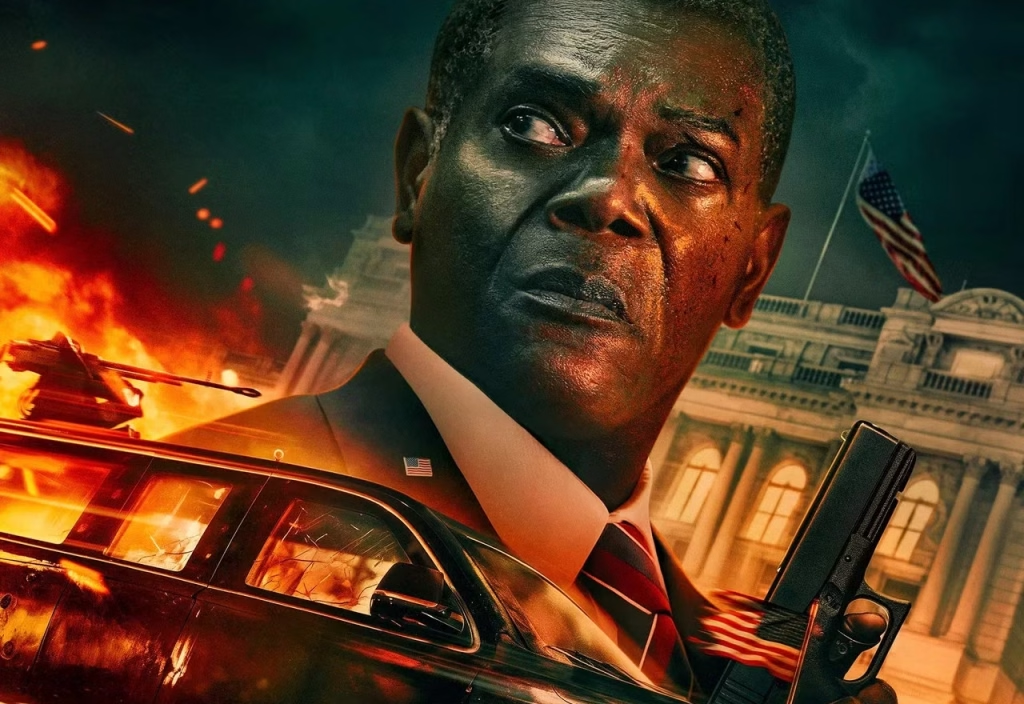
Director: Renny Harlin | Starring: Samuel L. Jackson (as President Oscar Paladdin), Joel Kinnaman | Rating: ★★★★☆
There’s a whole stretch of action cinema that never pretends to be respectable, and The Beast curls up right there with the engine idling hot. It isn’t pausing for teary speeches or puzzle-box twists; it’s wired to grab your nervous system and rattle it. Renny Harlin’s new film feels like one of those bruised, blood-slicked throwbacks, and to my eye it leans into that identity with a conviction that doesn’t feel manufactured.
Harlin, the Finnish specialist behind Die Hard 2, Cliffhanger, and The Long Kiss Goodnight, has never been accused of mistaking restraint for class. What stood out to me here is how sharp and disciplined he often feels. The Beast plays like his most concentrated work in years: tactically fluent, stripped of fat, and very clear about what it wants to be. The movie runs on a simple but effective chain of cause, effect, and overwhelming response, and when it lands, it hits with the blunt impact of a breaching charge against a reinforced door.

Two Heavyweights, One Chain of Command
Everything depends on the chemistry between Samuel L. Jackson and Joel Kinnaman, and that’s where the film really locks in. Jackson’s President Oscar Palladin isn’t a West Wing fantasy; he feels like a career operator who’s had worst-case scenarios actually happen and has adjusted his morality to survive them. His compass doesn’t point to true north so much as to whatever keeps the country moving, even when the price is ugly. Jackson gives him the familiar coiled authority, but there’s also a weather-beaten edge, a heaviness in the eyes, a sense that every cool, decisive order has left a bruise somewhere.
Kinnaman, as Secret Service agent Taft, becomes the film’s conscience and sandpaper. He doesn’t play Taft as just another stern bodyguard; there’s a physical intelligence to the way he moves and reacts that, for me, sells the training without turning it into a showreel. You buy his close-quarters instincts. You feel his fatigue stacking up scene by scene. More importantly, you feel the knot of his internal conflict tightening as the siege escalates around them. Rather than leaning on a simple hero-versus-bastard dynamic between Taft and Palladin, The Beast lets their friction grow out of clashing but coherent worldviews, and that nuance gives their arguments real sting.
Jackson and Kinnaman spark off each other like two live wires jammed into the same circuit. Whenever they share the frame, the movie tightens: they respect each other too much to dismiss the other’s position, and disagree too deeply to fully align. That tension, at least for me, turns even their quiet exchanges into little pressure cookers.
— ACTION-FLIX.COM on The Beast

The Military Machine in Motion
One of the reasons the film works as well as it does is that Harlin and his team clearly did some basic tactical homework within the story’s premise. The Beast doesn’t just drape its cast in cool gear and hope you won’t notice the gaps; it sweats enough of the details to feel convincing. Weapons are carried, reloaded, and cleared in ways that generally track. Radio chatter has the clipped rhythm of people who have said these phrases too many times under stress. The chain of command, and the ugly scramble when it cracks during the attack, are woven into the drama instead of just name-checked. Even in the quick glimpses we get, the streets, checkpoints, and barricades feel more functional than glossy, like places shaped by ugly necessity rather than pure movie polish.
Structurally, Harlin builds the story around a compressed, steadily escalating window of time. We’re dropped straight into a hostile situation as an unidentified militia coordinates a full-on strike against the United States, and we watch a supposed show-of-force motorcade slide into raw survival. The geography of the city streets matters. The camera stays close, handheld but not sloppy, giving you that feet-in-the-mud perspective without dissolving into shaky-cam mush. You usually know where people and vehicles are, which makes it sting more when things go wrong.

Escalating Set Pieces: A Masterclass in Sustained Momentum
Harlin also remembers something a lot of CG-drowned spectacle has forgotten: action scenes only really work if they’re drama first. They need stakes, not just noise. They need choices with consequences, not just bigger explosions. The Beast starts by sketching in a controlled, confident motorcade environment—the team efficient, the plan slick, the rhythm calm—purely so the film can spend the rest of its runtime dismantling that stability piece by piece.
Then the floor drops out. An unidentified, heavily armed militia slams into the president’s motorcade with horrifying precision, and the movie doesn’t ease you in. Glass bursts, metal folds, and the security detail is shredded in seconds. Taft ends up badly wounded in the back of the presidential limo, trying to process a situation that has outpaced even his training. Harlin stages the ambush with a clarity that’s rare: you can track the broad flanking moves, the failed counterattacks, the way the protective bubble collapses, even as the whole thing still feels terrifyingly out of control.
From there, the film hurls you into an urban gauntlet that barely lets up. Palladin is no longer just a head of state; he’s the guy physically muscling The Beast through burning streets, splintered intersections, and half-formed barricades that hit the SUV like concrete fists. The Beast never feels like some weightless CG toy; you feel the full, ugly heft of it every time it shoulder-checks another car, caves in metal, or grinds straight through wreckage without blinking. Each intersection turns into a kill zone. Armed trucks snarl in from side streets with heavy guns bristling, explosions punch the frame in the rearview, and the sick realisation creeps in that the commander in chief is now, in every brutal sense, his own last line of defence.
Once the noose tightens fully around the convoy remnants, Palladin starts to grasp just how much firepower his own ride has been hiding. The Beast isn’t just a rolling bunker; it’s a classified weapons platform dressed as a limo. When he brings its nastier systems online—concealed miniguns, automated countermeasures, the whole covert arsenal—the tone of the chase shifts. The vehicle stops merely surviving and starts forcing its way through the city, street by ugly street. Harlin lingers just long enough on the gear-spooling-up moments to sell the escalation, then keeps adding small, specific beats so that what begins as a panicked retreat slowly mutates into a messy, improvised counterassault, even as Palladin tries to reconnect with his wife and salvage some control over a country in freefall.
For all the spectacle, the movie keeps circling back to a very simple, very effective setup: a bleeding Taft in the back of an armoured monster while the world claws at the doors and Palladin fights to stay ahead of the next wave. That physical proximity gives the whole thing a nasty intimacy. The film regularly leaves the wide mayhem to stage cramped, desperate fights in and around The Beast itself—knife-close grapples, half-blind gunplay through half-open doors, ugly scrambles in tight corridors. Every hatch, step, and doorway threatens to become a breach point, which keeps the action grounded in bruises and breathlessness instead of drifting into abstraction.

Suspense That Earns Its Adrenaline
What genuinely surprised me is how good Harlin has become at using quiet as a weapon. In The Beast, the pauses between shots matter. You get long beats of reconnaissance and regrouping where nobody fires a round, but you can feel the danger thickening anyway. The silence before a door opens. The stillness before a drone feed or security camera tilt finally reveals something it shouldn’t. These aren’t filler scenes; they’re the girders holding up the big shootouts, and you can feel the movie tightening the screws during them.
The pacing has a kind of cocky confidence to it. The Beast assumes you’ll stay locked in through planning sessions, arguments over tactics, and stretches where the heavy firepower stays quiet, and in my experience it’s right. When the next set piece finally detonates, it lands harder because the film hasn’t been shouting at you nonstop. The rhythm mirrors a well-run operation: long stretches of tense waiting punctuated by short, violent bursts of movement. It’s an old structure, but Harlin executes it with a clarity that makes it feel freshly sharp.
The Beast Lives Up to Its Name
And then there’s the vehicle itself. The Beast, the armoured tank of a limo at the film’s centre, is arguably the third lead. Harlin introduces it like he’s unveiling a predator. Low angles make it look heavier than it already is. Close-ups of the armour plating tell you exactly how much punishment this thing has both given and absorbed. The sound design, as I heard it, turns every door seal, engine surge, and gear shift into a small threat. It’s not sleek, not pretty; it’s a hulking, angular presence that looks like somebody actually stress-tested it in a war zone before handing over the keys.
The crucial trick is that Harlin doesn’t overuse it. Whenever The Beast rolls into a scene at full power, the entire tactical picture changes. Enemies peel back, reposition, or throw everything they have at it. You feel that shift. The film is smart enough to keep the vehicle offstage just long enough that its return lands with a jolt. When it’s finally unleashed without much restraint, it becomes the film’s defining image: a brutal, rolling symbol of overwhelming force carving through a city that suddenly feels very small around it.
Harlin Unleashed: A Director Back on Full Power
If you’ve been following Renny Harlin’s career with all its peaks, dips, and odd detours, The Beast registers as more than just a solid genre entry; it feels like a reset. This is the version of Harlin people fell for in the first place: the director who understands scale, keeps the camera where it needs to be, and knows how to make an impact land in your gut instead of just on your retinas. There’s a sense here that he isn’t simply repeating old moves but refining them, cutting away the noise to get at what he’s always done best.
The film isn’t bulletproof. Some of the supporting players are sketched in with barely more than a trait or two, and there’s a back-channel intelligence thread that resolves so quickly it practically screams “deleted scenes.” Those issues register but don’t linger. The core of The Beast—two compelling leads locked in a moral and tactical crisis inside a meticulously staged action machine—is, to my eye, strong enough that the rough edges feel more like scuffs than cracks.
Verdict: Controlled Detonation
By the end, The Beast is unapologetically about tactical excess, and that’s baked into its DNA rather than slapped on as a marketing hook. In a market where a lot of action films confuse more for better, Harlin builds his chaos on top of solid groundwork: clear geography, weighty, real-feeling vehicle and body physics, and two central performances that tether every explosion to a human response. Jackson radiates command presence without ever softening Palladin into a saint. Kinnaman supplies the vulnerable, stubborn human core, the guy who has to live with the cost of every decision. Together, they give the movie its charge, and Harlin, older, sharper, and clearly hungry, channels that charge into something that feels properly alive to me.
This is an action movie made for people who actually love the genre, who care if the reloads make sense, who appreciate a clean line of sight in a shootout, and who want the spectacle tethered to characters instead of just quips. It nods to its predecessors without getting lost in nostalgia, and pushes forward where it counts: tighter craft, nastier tension, more grounded brutality, and performances that keep pulling your eye back to the actors instead of the effects. If you can, see it big and loud; The Beast is built to be felt as much as watched.
★★★★☆ — Essential Viewing for Action Cinema Devotees


