

 0
 0
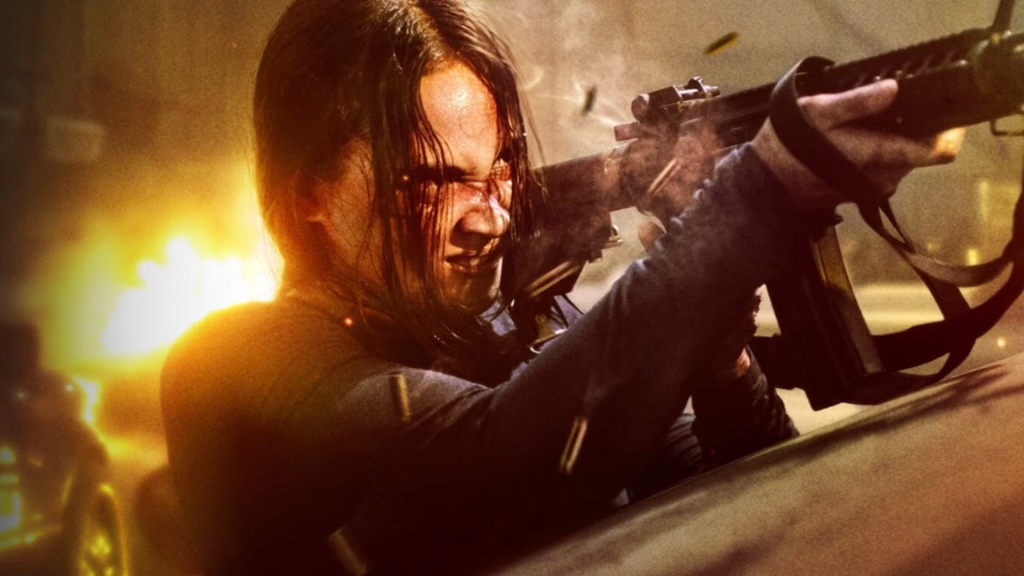
Netflix’s The Shadow Strays kicks the door in and doesn’t bother apologizing for the mess. This is Indonesian action cinema at its most feral — a bruising, breathless showcase of physical filmmaking that gets your pulse up before the opening credits even finish. I went in expecting a solid genre exercise. I got something closer to a knife fight I couldn’t look away from. The Shadow Strays goes straight for the jugular, with its savage action and emotional intensity and it’s time I give the film the proper praise it deserves.

A MISSION WRAPPED IN A MYSTERY
We meet Codename 13 — also known as Nomi — already knee-deep in the job: a 17-year-old assassin trained by the shadowy organization known, fittingly, as the Shadows. She’s dispatching the head of a Japanese criminal clan with the kind of clinical ease her handlers expect, and then it happens — an accidental kill of an innocent bystander, a slip so small by professional standards and so massive by hers that it stops her cold. She can’t finish the job. Her mentor, Umbra, has to swoop in and clean up before things get worse.
That one lapse is enough to get 13 yanked off active duty and shipped to Jakarta for “psychological retraining,” which is really just the Shadows’ polite way of saying they’re shelving a broken weapon until it stops malfunctioning. And here’s what I appreciated: the film doesn’t pretend 13 is cracking under the violence itself. It’s the trauma underneath — recurring nightmares about her mother’s death, ripped open again by the Japan mission. While she waits out her suspension, she ends up living near Monji, an 11-year-old boy grieving his own mother, and the two of them form this quiet, unlikely bond. Two wounded people circling the same hole. It’s this friendship, not some order from headquarters, that ends up driving the whole back half of the movie.

While 13 is working her way toward Monji, there’s a second fuse burning quietly in the background: Umbra gets sent to take out rogue operatives who’ve stepped out of line — standard extermination work, until she’s ordered to kill Volver, a pregnant former agent. The hesitation that crosses Umbra’s face in that moment tells you more about the Shadows than any monologue could. This is an organization built on total obedience and total brutality, and it has no good answer for what happens when its most loyal killer finally flinches. It’s a small, cold thread, but it reshapes everything you thought you understood about her loyalty.
13’s road to Monji runs straight through the Moonrose club, the syndicate’s nerve center, where she kills Haga and Prasetyo while tearing the whole operation apart on her way back out. She gets Monji back — but the cost of that mission catches up with her at Ariel’s mansion, where she’s finally captured. Not because her skills gave out, but because loyalty to a kid was never something her training accounted for. The film stays cagey about what her capture means for her future with the Shadows, but one thing’s clear: she’d cross that line again without blinking.
Everything blows up the moment Monji gets kidnapped by a syndicate with rot running through every layer of the city — Haga and his twin sister Soria handling the muscle and trafficking, a corrupt detective named Prasetyo providing legal cover, and political candidate Ariel lending the whole thing a respectable, camera-ready face. 13, still technically benched, tears up her own rulebook to go get him back, and the deeper she digs, the uglier it gets: drug trafficking, human exploitation, political corruption, all braided together and shielded by the exact people supposed to be stopping it. Her unauthorized rescue turns into a one-woman demolition job on the entire rotten structure, with Haga, Soria, Prasetyo, and Ariel standing between her and a boy she has no official reason to save.

ACTION DESIGN WITH TEETH
This is where the movie earns its paycheck. The action is ferocious and tactile, built on the simple, brutal idea that every single room is a weapon. Blades flash, bodies crash through furniture, guns turn tight hallways into pressure cookers, and every hit actually seems to land with weight behind it. Close-quarters combat, gunplay, improvised weapons, punishing hand-to-hand — none of it feels thrown together. You can tell someone sat down and designed these fights like puzzles.
The camera gets it, too. It stays close enough that the danger feels immediate, but it never crowds out the performers’ work — you can actually see the mechanics of each exchange. The editing gets frantic at times, sure, but the best sequences never lose their geography: you always know where the threat is, where 13 is headed, and how badly the next ten seconds are going to hurt. This is the kind of movie that can turn a plain hallway into an event, and honestly, that’s a rarer skill than people give it credit for.
On top of all that, director Timo Tjahjanto cranks the gore up into something closer to weaponized spectacle — slasher-horror violence pushed to steroidal extremes, but never at the expense of clarity. Limbs get hacked off in full view, heads come off with almost obscene ease, arterial sprays paint the frame like deranged brushstrokes — and yet none of it feels random. The camera lingers just long enough on the carnage to make you wince, then snaps right back to spatial logic and momentum. This isn’t chaos for its own sake. It’s a deliberate fusion of hard-military shootouts with gleeful horror-movie grammar, and it’s next-level not because it’s the bloodiest thing you’ve ever seen, but because every eruption of viscera feels like an escalation of character and mood instead of cheap shock.
AURORA RIBERO: AN ACTION STAR IS BORN
Aurora Ribero is a revelation as 13 — this is a genuine action star-making turn. She moves through the movie with the ferocity of a weapon finally pointed back at the people who built it, but she never once disappears behind the bloodshed. Every brutal strike, every graceful feint, every exhausted breath carries the weight of a young woman clawing to reclaim the humanity her training was engineered to strip away. That tension between the precision of the killer and the wounded kid trying to surface underneath is what gives the carnage its pulse — without it, this would just be a highlight reel.

HANA MALASAN: THE TWISTED MOTHER FIGURE
If 13 is the wounded blade at the center of all this, Hana Malasan’s Umbra is the hand that forged her — and the movie is smart enough to let that history poison every scene they share. Umbra is introduced as the organization’s apex predator, someone whose economy of motion makes even 13 look undisciplined by comparison. But Malasan plays her as something far more unsettling than a rival assassin: a woman who raised a weapon and, somewhere along the way, without meaning to, raised a daughter.
There’s a terrible tenderness buried under Umbra’s clinical surface — you catch it in the half-second hesitations before a killing blow, in the way her eyes track 13 across a room like she’s scanning for injuries, in the flickers of something close to grief when she talks about who 13 has become. Credit to Malasan for never letting that softness curdle into sentimentality. It stays locked down, a buried instinct losing a slow war against years of conditioning and loyalty to the people signing her paychecks.
THE VILE VILLAINS: PRASETYO AND ARIEL
13’s rampage gets two human targets, and each one represents a different flavor of rot. Adipati Dolken’s Prasetyo is a crooked cop eaten alive by a vendetta after 13 killed his brother, wielding his badge like a personal weapon while his grief curdles into institutional cruelty. Andri Mashadi’s Ariel is poisonous in a totally different register — the entitled, vicious son of a crooked politician, a drug-dealing parasite who treats power and other people’s lives like property he inherited. Prasetyo’s corruption comes sharpened by hatred; Ariel’s comes upholstered in privilege. Together they give 13’s blood-soaked mission a target with an actual pulse, not faceless fodder — guys whose grudges and impunity make every brutal collision feel grimly, satisfyingly earned.

THREE ACTION SET PIECES THAT GO FOR THE THROAT
The film opens with a nearly fifteen-minute raid that plays like a mission statement all by itself. Futuristic-ninja operatives in matte tactical gear, masked and wired with night vision, infiltrate a guarded compound with silent precision — until the job curdles into chaos. Silenced swords and synchronized takedowns give way to a bullet-and-blade marathon, bones snapping, arterial color spraying across the frame, the gore escalating until the sequence has told you exactly what kind of beast you’re watching.
That ferocity follows her into the Moonrose club, where neon strobes and fog-choked sightlines turn a packed dance floor into a kill box. Hunting for the kidnapped Monji, 13 carves through wave after wave of goons, the cramped space and flashing lights forcing her to improvise with broken bottles, barstools, whatever her enemies happen to be holding. The choreography leans into the claustrophobia instead of fighting it — every strobe flash lands like a cue for another bone-crunching hit.
The savagery peaks inside a warehouse, where a tense drug deal between Ariel and a rival gang detonates into carnage under harsh fluorescent light. 13 fights an entire army through stacked crates and blind corners, full-auto gunfire giving way to a long, punishing stretch of hand-to-hand brutality. Sparks, shattered pallets, blood-slicked light — the space itself becomes a combatant, and by the time the dust settles, she’s carved a path through sheer mayhem to get closer to Monji.
THE SAVAGE FINALE
The finale pulls every thread — physical, emotional, tactical — into one savage crescendo, and it manages this without tipping its hand on the movie’s biggest reveals. 13’s reckoning with the people who made her collides head-on with the fate of the boy she’s spent the whole film protecting, and the action mirrors that collision: messier, more desperate, trading the earlier sequences’ clean geometry for something rawer and far more personal.
The camera moves tighter, the cuts land harder, and the sound mix drops out at just the right moments so a single gasp or cracked rib rings out louder than the gunfire around it. At the center of it all, 13 and Umbra collide in a vicious, stripped-down duel that radiates personal rage and elite combat skill — every feint, every impact, feels genuinely lethal. This is a finale built less on spectacle for its own sake than on the accumulated weight of everything 13 has survived to get here, and it closes the book on exactly the kind of brutal, breathless note the opening promised.

NEXT-LEVEL ACTION DESIGN: BARBARICALLY BEAUTIFUL
This movie doesn’t just choreograph violence — it sculpts it into something savage and perversely gorgeous, the kind of combat design that feels engineered to leave bruises on the audience watching it. Swords carve through the frame in blistering arcs, each slash landing with a crisp, blood-slicked finality that makes the swordplay feel almost like calligraphy written in arterial spray.
When the guns come out, it detonates into full-auto firepower and heroic bloodshed so operatic it would make John Woo blush — bodies crumpling in balletic slow-motion amid muzzle flash and shattering glass. And when the ammo runs dry, the hand-to-hand takes over with a hyper-kinetic ferocity so physical you can practically feel every elbow and dislocated joint in your own ribs. It’s choreography with teeth. Brutality staged as art. Barbaric, beautiful, and completely unrelenting.
TIMO TJAHJANTO: THE NEXT GENERATION OF ACTION
Tjahjanto directs like a man with something to prove and nothing left to lose, and this is the clearest statement yet from a filmmaker who flat-out refuses to compromise. His sensibility is muscular and stubborn: every set piece is built to escalate, every confrontation has to outdo the brutality before it, and every lull in the action exists purely to load tension for the next explosion. In many ways, The Shadow Strays plays like part of the brutal filmmaking apprenticeship that first carved his name into the genre, of a piece with the bone-shattering ferocity of The Night Comes for Us, where he learned to fuse operatic carnage with razor-precise choreography.
That savage, kinetic style has only grown more refined and more ruthless, powering his leap into bigger studio action with Nobody 2, where his taste for escalating mayhem and tightly staged impact shots turns mainstream spectacle into something meaner, sharper, and more dangerous. Now, as he steps into the arena of the upcoming Jason Statham sequel The Beekeeper 2, his track record suggests a rising, heightened action sensibility that could push the franchise into even wilder, more adrenaline-soaked territory, hinting at a follow-up that has every opportunity to outstrip the first film without ever promising the outcome before the dust actually settles.
He choreographs combat with a tactician’s eye for geography and a provocateur’s appetite for excess, fusing military precision with a willingness to push sequences past the point most directors would call it quits. That relentless pacing never lets you get comfortable, and the bone-deep impact of every strike makes his fingerprints unmistakable — a filmmaker chasing genre extremity as far as it’ll go, and skilled enough to make it feel purposeful instead of gratuitous.

THE STRENGTHS — AND THE SCARS
The film’s biggest strengths are its conviction, its physical performances, and its refusal to sand down the rough edges of its own violence. There’s a pulpy, midnight-movie energy running through it, but the filmmaking is far more disciplined than the premise lets on. The atmosphere is grimy and stylish, the sound design makes every collision actually land, and the escalating set pieces deliver the kind of kinetic release too many modern action movies trade away for weightless digital spectacle.
The weaknesses are real, though, and worth saying out loud. The runtime occasionally feels bloated, the mythology is sometimes more intriguing than the exposition actually explaining it, and a few character beats arrive at full speed when they could’ve used another breath to land. The relentless brutality is also going to be a hard no for anyone who likes their action with a softer edge — fair warning. But these feel like bruises on an otherwise hard-charging movie, not cracks in its foundation.
FINAL VERDICT
The Shadow Strays is not here to play nice. It goes straight for the jugular with savage, relentless action and a bruising emotional intensity that never lets up, the kind of movie that clamps down and refuses to let go. It’s been out for a few years now, largely slipping under the radar, but it’s long past time it got the praise and recognition it deserves. This isn’t a reinvention of the assassin thriller—the bones of the genre are all there—but it attacks the formula with such ruthless precision, bruising rhythm, and cold-blooded confidence that the familiar suddenly feels volatile and alive again. Every set piece is calibrated for maximum impact, with action design that turns blunt force, blades, and bodies into cruel choreography, each hit landing with wince-inducing solidity you feel in your chest.
What keeps it from becoming empty carnage, though, is the emotional weight pulsing underneath all that violence: the film never forgets what this brutality costs its characters, letting quiet, wounded moments bleed into the mayhem until every broken bone and spilled drop of blood carries a sting of regret. Come for the knife work, stay for the emotional undercurrent, and brace yourself as the film keeps escalating, scene after scene, finding new, viciously clever ways to weaponize whatever room it’s in — and leaving you a little rattled by just how hard it all hits. By the time the credits roll, The Shadow Strays doesn’t just land—it detonates, and you’ll be desperate to feel that blast again.
By the final blow, you won’t just be watching the chaos—you’ll be begging for another round.
Rating: ★★★★☆ 4 out of 5 stars


