

 0
 0
Spoiler warning: This review gives away major plot details, including Ray Jay’s murder, the corrupt-cop investigation, key revelations, and the ending. Watch Oscar Shaw first, then come back for the full Action-Flix breakdown.
The Setup: A Murder That Starts a Slow Burn
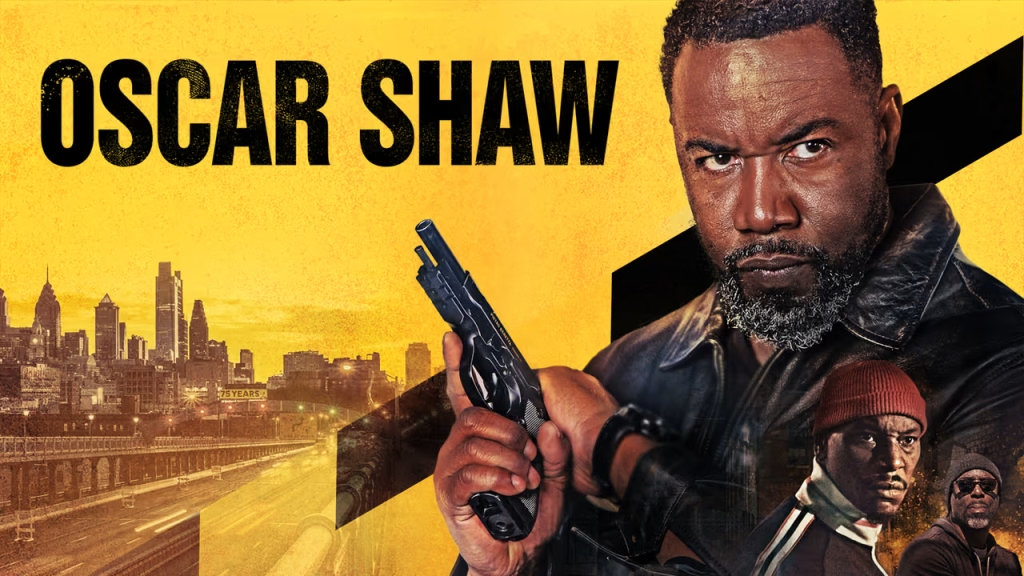
Oscar Shaw opens as a slow-burn, street-level revenge thriller built around a loss that immediately defines the story. Michael Jai White’s Oscar is a retired detective and former police officer trying to keep a tight grip on a controlled life when his closest friend and fellow ex-cop Ray Jay (Tyrese Gibson) is murdered. The film sketches their long-term bond quickly and clearly on screen—partners, drinking buddies, and brothers-in-arms—before Ray is taken out, and that killing becomes the fuse for everything that follows.
What we see isn’t a flashy prologue built around spectacle; it’s a personal blow that pushes Oscar out of retirement and back into a world he thought he’d left behind. From that point forward, the movie frames itself as a slow, methodical revenge-driven investigation: one man determined to find out who killed Ray, and why, even if that means pulling at threads that run through the street and back into the police world they both came from.

The Investigation: A Corrupt-Cop Framework, Played Grounded
The core of the film is Oscar’s mission to unravel Ray’s death, and the movie plants that story squarely inside a familiar corrupt-cop framework. On screen, it becomes clear that Oscar and Ray are tied to a wider web of dirty officers and criminal operators, and that Ray’s murder is part of a scheme that treats both men as expendable pieces. Rather than turning this into a sprawling conspiracy thriller, the film keeps the mystery narrow and street-level, following Oscar as he leans on old contacts, revisits shared haunts, and pushes into corners of the city where uniforms and criminal networks intersect.
What plays out structurally will feel straightforward to genre fans: cops crossing lines, a criminal network exploiting that corruption, and past compromises coming due. The execution, though, stays grounded. We see Oscar work the case like an ex-detective who still remembers how to follow money, names, and patterns, but the movie presents this as character-driven legwork rather than dense procedure. Each stop along the way nudges him closer to the people who wanted Ray dead without turning the story into an elaborate puzzle box.
Michael Jai White: Stoic Presence in a Slow-Burn Thriller
Michael Jai White plays Oscar as a controlled, coiled presence rather than a wall-to-wall martial-arts machine. The performance is built around stillness and weight—he reads like a man who has spent years training himself not to explode, and the film lets that tension sit on his face and in his posture. When he does move, whether it’s in a brief burst of violence or a hard-edged confrontation, it feels like an extension of the grief and anger the movie has already put on screen instead of a showcase reel of choreographed fights.

Tyrese Gibson’s Ray Jay: The Loss That Drives the Story
Tyrese Gibson’s Ray Jay isn’t a throwaway sidekick or a generic best friend; he’s Oscar’s fellow former police partner and closest companion, and the movie makes that relationship text. Their shared history is written into how they talk, where they drink, and how comfortable they are in each other’s space before the killing, and Ray’s murder is the central plot event that puts Oscar on his path. Gibson’s time on screen sets up the loyalty and trust that the rest of the movie keeps circling, so even after Ray is gone, the investigation and every choice Oscar makes play as a response to that loss rather than a simple excuse for mayhem.
Isaiah Washington: Low-Key Support as Ernie
Isaiah Washington appears in a small but notable supporting role as Ernie, a friend who runs the pub Oscar and Ray frequent. What we see on screen is a man who knows these former cops well and serves as part of the social fabric around them, not a dominant villain or a mastermind. Washington underplays Ernie, giving the character a calm, steady presence that fits the film’s grounded tone and adds texture to Oscar’s world without taking over the narrative.
The Action: Sprinkled Beats, Not Wall-to-Wall Mayhem
Despite Michael Jai White’s martial-arts background, Oscar Shaw is not a nonstop fight movie. The action is doled out in small, tense beats that punctuate the investigation: urban confrontations, short exchanges of gunfire, and close-quarters clashes where Oscar’s physicality matters but never turns into extended choreography. The gunplay leans on tight interiors and street corners rather than massive set pieces, matching the film’s street-level scope and keeping the violence tied directly to Oscar’s search for answers.
Most of the set pieces play as contained confrontations rather than explosive spectacles—brief, mean encounters where cover, angles, and timing matter, and where every trigger pull is connected to someone trying to shut down Oscar’s investigation. The film favors clarity over chaos, letting us understand who is shooting and why, without layering on elaborate stunt showcases or crowd-clearing sequences.
One of the more memorable stretches locks the characters into cramped, industrial spaces and uses darkness, limited sightlines, and hard cover to keep the tension high. The beats are short and purposeful: Oscar moves, someone fires, and each step forward costs something. The film doesn’t linger on gore or overstate the scale, but those moments give the slow burn some needed jolts and underline how dangerous Oscar’s path has become.
The few close-in brawls and hard takedowns that punctuate these scenes feel like spikes of brutality inside a crime world ruled by bullets and bad choices, not like an endless, over-choreographed combo reel. It isn’t the biggest action movie of the year, yet pound for pound the mix of grounded gunplay, bruising impacts, and emotionally charged confrontations makes the set pieces feel above-average for this budget tier without overselling what’s on screen.

Pacing, Direction, and the Screenplay
Directors R. Ellis Frazier and Justin Nesbitt stage Oscar Shaw with an unfussy, functional style that fits the material. The camera mostly stays close to Oscar’s point of view, tracking him through bars, apartments, and back rooms instead of swinging wide for glossy spectacle. On screen, the focus is clearly on performances and forward motion: scenes are blocked and cut so the audience can follow who knows what, who’s lying, and how each new piece of information pushes the retired detective deeper into trouble.
Don Roff’s screenplay leans on a familiar corrupt-cop backbone—but that familiarity works in the film’s favor as a grounded mystery. The middle stretch sometimes feels slow, and certain investigative beats repeat, yet the script keeps the throughline clear: Oscar wants to know who killed Ray and how far the rot around them goes. The movie doesn’t pretend to be a genre reinvention or a complex procedural; instead, it plays as a straightforward, character-focused action crime drama that understands the appeal of watching a capable man push through a rigged system.
The Corruption and the Reveal
Within the revenge framework, Oscar Shaw builds to the realization that Oscar and Ray have been caught in the gears of a corrupt scheme involving both cops and criminals. The specifics stay relatively simple on screen—dirty police ties, a larger network using that protection, and Ray’s death as fallout rather than random violence—but those elements are enough to shift the story from personal grief into a broader reckoning with institutional rot. As the truth surfaces, the film doesn’t rely on wild twists; instead, it uses each revelation to harden Oscar’s resolve and narrow his focus to the people directly responsible for Ray’s murder.
The Final Confrontations and the Ending
By the final stretch, the clues have lined up, the guilty parties are clear, and the movie turns from questions to consequences. The climax stays true to the film’s slow-burn scale: a tense confrontation built on information coming to light, wary standoffs, and a handful of sharp, startling bursts of gunfire rather than any drawn‑out firefight or spectacle. What we see is Oscar pushing through the last line of opposition mostly by forcing the truth into the open, with violence flaring up briefly and brutally, bringing his investigation to a head in a way that feels of a piece with the methodical work that led there.
The resolution doesn’t break the revenge or corrupt-cop mold, but it lands where this kind of grounded thriller needs to: the responsible figures are directly confronted, their motives and protection schemes are made explicit, and the emotional and moral cost of uncovering them is visible on Oscar. Instead of an operatic showdown, the film closes on an understated, rough-edged note that feels earned for a story about a man methodically pulling apart a rigged system that treated him and his partner as disposable pieces, and walking away changed rather than triumphant.

Themes: Corruption, Loyalty, and the Cost of Justice
Underneath the gunfire and confrontations, Oscar Shaw circles a classic revenge-thriller question: what does justice cost when the system itself is compromised? The movie shows Oscar as a man pulled back into violence not just by grief, but by the realization that he and Ray were used by the very world they once served. That awareness plays out on screen through who gets targeted, who sells him out, and which lines he’s willing to cross when he no longer trusts the badge that used to define him.
The film treats Ray’s memory as the emotional center of the investigation, and each tactical decision or trigger pull pushes Oscar further away from the life he was trying to build. The more the corrupt-cop network comes into focus, the clearer it becomes that there’s no clean path back for him—only the hope that uncovering the truth and settling accounts will mean Ray didn’t die entirely for nothing. That tension between loyalty, anger, and the need for some version of justice gives the movie its weight beyond the individual action beats.
Who Should Watch Oscar Shaw
If you’re looking for a wall-to-wall martial-arts clinic, Oscar Shaw is not that film; it’s a slow-burn, street-level revenge thriller and action crime drama with modest, well-placed bursts of violence. Michael Jai White fans who appreciate his stoic presence and grounded physicality will find plenty to latch onto in his portrayal of a retired detective methodically working a corrupt-cop mystery. Viewers who enjoy Tyrese Gibson’s charisma and want Ray Jay to matter to the story—not just as a throwaway buddy, but as the central loss driving the plot—and those who like seeing Isaiah Washington anchor a small, steady supporting role will also find this worth a look.
THE VERDICT
Oscar Shaw is a lean, slow-burn 2026 action crime drama and revenge thriller that does what it promises: it drops Michael Jai White’s retired detective into a corrupt-cop framework, tears his closest partner away, and follows him as he pushes through a dirty network one lead at a time. Built around grounded mystery beats, street violence, and personal stakes instead of nonstop spectacle, it keeps the focus on Oscar’s need to understand who killed Ray Jay and why.
This isn’t a wall-to-wall martial-arts showcase or a choreography reel; it’s a character-driven investigation punctuated by short, tense confrontations, with White’s presence anchoring urban gunfights and close-quarters scraps rather than endless exhibition fights. The story’s familiarity and a saggy midsection keep it shy of top-tier status, but its solid corrupt-cop backbone, clear sense of stakes, and committed performances give it enough personality to satisfy action and thriller fans who don’t need constant explosions.
★★★☆½ Action-Flix Rating: 3.5/5


